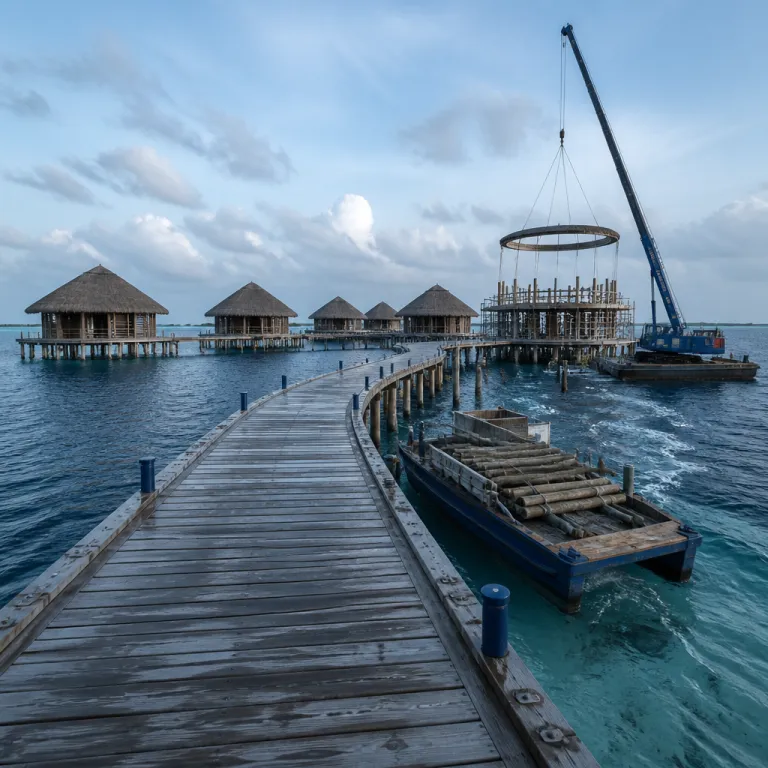
Singita Elela in the Okavango Delta: a new kind of water camp
Singita Elela arrives in the Okavango Delta as more than another luxury safari lodge; it is the brand’s first statement in Botswana and a test case for how ultra high end travelers will engage with a fragile wetland. In a 175,000 hectare private area within the Abu concession (NG26), this circular bedroom camp on stilts is designed so that every person feels the delta flowing beneath their feet, rather than simply viewing it from a raised deck. The result is a property where each night feels choreographed around water levels, light, and the quiet that settles when the mokoro guide lifts his paddle and the delta listens.
The main SEO phrase singita elela okavango delta 2026 has already become shorthand among agents for a new benchmark in Botswana Singita planning, even before the first guests arrive. Here, Elela will operate as a camp that leans into the meaning of its Setswana name — “to flow” — with circular suites that echo the curves of the Okavango channels and the seasonal flood lines that define every season. For travelers comparing a luxury safari between Mombo Camp, Jao Camp, Xigera Safari Lodge and this new arrival, the question is not only about game density, but about how the concession is managed and how conservation shapes every game drive, walk, and boat outing.
Singita’s move into the Okavango Delta follows decades of work in South Africa, Tanzania, Rwanda, and Zimbabwe, where the brand has tied long term conservation to carefully controlled guest numbers. At Elela, that conservation purpose meets a private concession that has already seen different management philosophies, and the shift will be watched closely by those who know the Abu concession well. As Singita’s conservation team notes in its Abu briefing, “every decision in camp design and operations is tested against a 100 year horizon,” a reminder that for readers planning a Botswana itinerary, this is the moment to understand how one safari lodge can alter the rhythm of a whole area, from the timing of game drives in peak season to how many vehicles are allowed at a single sighting in oct dec or jun oct.
Eight circular camps on stilts: how Elela will host the delta
The physical layout of Singita Elela is unusually clear in its intent; eight circular camps on stilts, lifted above the floodplain so that the Okavango can move freely beneath. Five one bedroom suites, two two bedroom suites, and one four bedroom retreat form a compact bedroom camp cluster, each with private decks that face different channels of the delta. For guests, that means every person wakes to a slightly different angle of light, water, and game, even though the camp footprint remains deliberately small.
The one bedroom camps are aimed at couples and solo travelers who want a focused luxury safari, with private spaces but shared access to the main lodge, meals, and drinks. Families or small groups will gravitate toward the two bedroom and four bedroom options, where a private guide, vehicle, and host are included, turning each camp into a self contained safari lodge within the wider Abu concession. This is where Elela will quietly reset expectations for multigenerational travel in Botswana, especially for those used to booking separate tents at Mombo Camp or Jao Camp rather than one integrated retreat.
The four bedroom retreat in particular signals how Singita Elela will serve extended families or executive groups who want privacy without losing the immediacy of the Okavango Delta. With its own pool, fire deck, and dedicated team, it allows eight to ten guests to move through the concession on their own schedule, choosing early game drives, late boating, or slow mornings on the deck while meals and drinks appear almost invisibly. If you are weighing this against more traditional resort style stays, our guide to what “resort” means in Botswana — from tented suites to hippos by the pool — on this in depth resort in Botswana feature will help frame the decision.
Abu concession, private rules: what changes when Singita arrives
The Abu concession, also known as NG26, has long been one of the Okavango Delta’s most studied private concessions, with a history of elephant focused tourism and carefully limited bed numbers. A private concession in Botswana allows an operator to control vehicle density, off road access, and night drives, which in turn shapes how both game and guests experience the landscape. When Singita Elela takes over its share of this space, the brand’s conservation first approach will inevitably recalibrate how the area is used across every season.
Singita’s stated ambition is a 100 year conservation vision, and in Botswana that translates into strict caps on guests per camp, low impact infrastructure, and a focus on long term ecological monitoring rather than short term occupancy. In practical terms, that means fewer vehicles at sightings, more time spent on walking safaris and mokoro outings, and a renewed emphasis on how each game drive contributes to data on species movement and habitat health. For travelers used to the busier corners of the delta, the difference between a public area and a private concession like Abu becomes immediately clear when your vehicle is the only one watching wild dogs cross a channel at dusk.
For those mapping out a multi stop itinerary, the arrival of Singita Elela also shifts the balance between established icons such as Mombo Camp, Jao Camp, and Xigera Safari Lodge. Each of these camps sits in a different concession with its own rules, habitat mix, and game viewing style, and Elela will add a new layer of choice for those who care as much about conservation models as they do about sightings. Our concession by concession reckoning of the best hotels in Botswana on this detailed Delta concessions guide is a useful companion when deciding how to pair Abu with other areas.
Seasonality, game drives, and how to time your stay
Planning a stay at Singita Elela in the Okavango Delta means thinking in seasons rather than months on a calendar. The classic apr oct window is often described as peak season for a luxury safari in Botswana, with cooler days, thinning grasses, and increasingly concentrated game along the channels. Yet the so called green months from jan mar or into dec jan can be equally rewarding for guests who value dramatic skies, fewer vehicles, and a sense of the delta breathing after the first rains.
In practical booking terms, oct dec and jun oct are likely to be the most requested periods for Singita Elela, especially for travelers pairing the camp with Cape Town or the winelands. During these months, game drives focus on predator activity along the floodplains, while boating and mokoro excursions depend on local water levels that shift subtly each year. The camp’s guides will adjust daily plans so that each person experiences a balance of drives, walks, and water based outings, rather than chasing a checklist of species.
For those considering a stay over the festive dec period or into jan, the atmosphere changes again, with more families in the four bedroom retreat and two bedroom suites, and a softer, greener landscape. Night drives become especially atmospheric, with frogs, owls, and the occasional leopard encounter under a sky that feels close enough to touch. If you are combining Elela with more active experiences, such as the ultra trail that links the delta to Tsodilo Hills, our feature on Botswana’s new 100 kilometre ultra trail offers a useful lens on how to pace your journey.
Inside the Elela experience: conservation, service, and multigenerational travel
Life at Singita Elela will revolve around a simple rhythm; early morning game drives or walks, long unhurried meals and drinks back at camp, and afternoons that slide from siesta to sunset. Each bedroom, whether in a one bedroom camp or the four bedroom retreat, is designed as a quiet observatory, with large windows and decks that frame the Okavango Delta rather than the interior design. For many guests, the most powerful moments will not be the big game sightings, but the silence when the mokoro poler stops paddling and the delta seems to pause with him.
Conservation is not an abstract concept here; it is the reason Singita entered Botswana and the reason the Abu concession was chosen. The brand works with local communities and conservation organisations to ensure that every person employed, every activity offered, and every night spent in camp contributes to a longer story of habitat protection and community benefit. As Singita’s head of conservation in Botswana explains, “we look at every stay through two lenses: guest experience and measurable ecological impact,” a useful way to understand how one bedroom, two bedroom, and four bedroom camps, and a menu of game drives, boating, mokoro excursions, and walking safaris where children of all ages are welcome, all fit into a single conservation narrative.
For multigenerational groups, the four bedroom retreat at Singita Elela is a quiet revolution in how ultra luxury families use the Okavango Delta. Grandparents can opt for shorter drives, parents can head out on longer walks, and teenagers can split their time between the pool and the vehicle, all while sharing one private guide and host who understand the group’s rhythm. In this sense, the phrase singita elela okavango delta 2026 has come to represent not just a new lodge opening, but a new way of thinking about how a single safari lodge can hold several generations, several expectations, and one shared commitment to Botswana’s future.
How to book Singita Elela and position it in a Botswana itinerary
Booking Singita Elela is not about finding a last minute deal; it is about securing the right season, the right bedroom configuration, and the right flow through the Okavango Delta and beyond. For couples, a one bedroom camp stay of three to four nights often works well, especially when paired with a drier area of Botswana or a city break before or after. Families and groups should think in terms of at least four nights in the two bedroom or four bedroom retreat, allowing time for the camp team to understand each person’s pace and preferences.
Travel planners already speak of singita elela okavango delta 2026 as a fixed point around which to build a wider Botswana Singita journey, even if the brand currently operates only this one safari lodge in the country. A classic pattern might include a few nights at a dry land camp elsewhere in the delta, followed by Elela for water based contrast, and then a final stop in a different ecosystem such as the Makgadikgadi or the Kalahari. When comparing options like Mombo Camp, Jao Camp, and Xigera Safari Lodge, the key is to look beyond rate per night and focus on concession rules, conservation models, and how each property structures its game drives and activities.
For those using a luxury and premium hotel booking website focused on Botswana, the filters that matter most here are not spa menus or pillow choices, but concession location, guest numbers, and conservation commitments. Ask explicitly about how many vehicles are allowed at a sighting, whether night drives are possible, and how the camp engages with nearby communities. In a landscape where every season brings a different face of the delta, Singita Elela stands out as a place where Elela will always mean flow — of water, of wildlife, and of a quieter, more deliberate way of traveling through Botswana.
FAQ
What types of accommodations does Singita Elela offer ?
Singita Elela offers three main accommodation types; one bedroom suites for couples or solo travelers, two bedroom suites for families or friends, and a four bedroom retreat designed for multigenerational groups or private parties. All eight circular camps are raised on stilts above the floodplain, with views over the Okavango Delta channels. Each option includes en suite bedrooms, indoor and outdoor living areas, and access to shared or private guides depending on the configuration.
Where exactly is Singita Elela located in Botswana ?
Singita Elela is located in the Abu concession, also known as NG26, in the northwestern Okavango Delta of Botswana. This is a 175,000 hectare private concession, which allows the operator to control vehicle numbers, off road access, and night drives. The lodge is reached by light aircraft from Maun or Kasane, followed by a short game drive or boat transfer into camp depending on water levels.
What activities can guests expect during a stay at Elela ?
Guests at Singita Elela can expect a mix of game drives, boating, mokoro excursions, and walking safaris, adjusted to the season and daily conditions. Morning and afternoon game drives explore the Abu concession’s floodplains, woodlands, and islands, while water based activities focus on channels and lagoons when levels permit. Night drives, birding, and photographic opportunities are also part of the experience, with private vehicles available for those in the larger suites.
Is Singita Elela suitable for families with children ?
Yes, Singita Elela is designed to be family friendly, with children of all ages welcome in the two bedroom suites and four bedroom retreat. Private guides and vehicles allow families to tailor game drives to shorter attention spans or specific interests. The camp team can also arrange child focused activities in and around camp, balancing safety with a sense of adventure.
How far in advance should I book Singita Elela for peak season ?
For peak season periods such as apr oct or the popular jun oct window, it is advisable to book Singita Elela at least 12 to 18 months in advance, especially for the four bedroom retreat. Shoulder periods like oct dec and jan mar may offer slightly more flexibility, but availability is still limited by the small number of camps and strict guest caps. Working with a specialist agent or a dedicated Botswana luxury booking platform will help secure preferred dates and room types.
Sources
Singita official communications and lodge announcements, including the Singita Abu concession fact sheet (NG26, 175,000 hectares); Botswana Tourism Organisation briefings on private concessions and visitor caps; Okavango Research Institute publications on NG26 land use, wildlife monitoring, and delta hydrology.