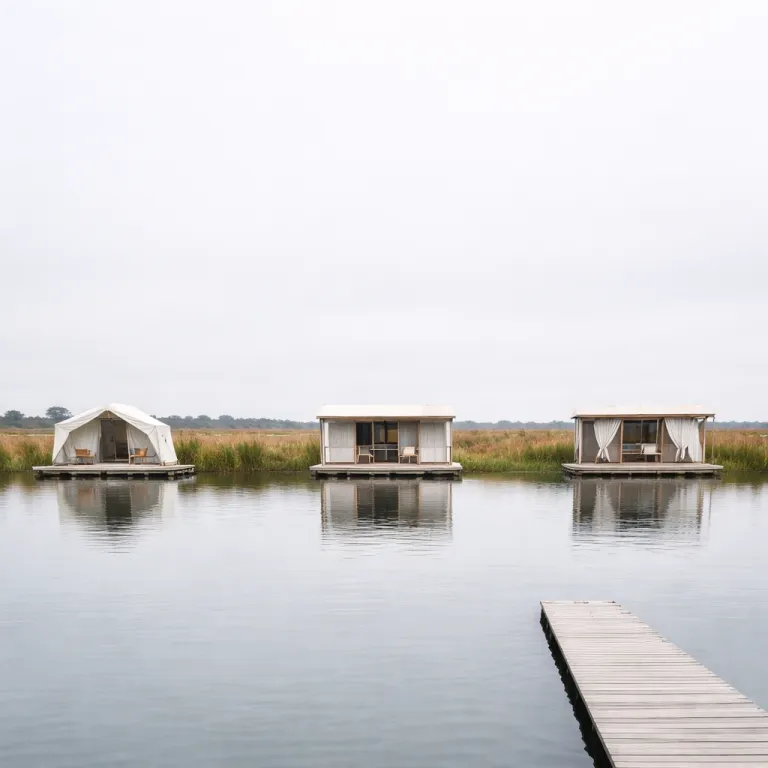
Rethinking where to stay in Botswana: start with who you are
Asking where to stay in Botswana is the wrong opening question. A better starting point is asking where your energy, curiosity and comfort levels will be on day three of your Botswana safari, when the jet lag has faded and the delta silence finally lands. Only then can you match a camp, a lodge and a specific reserve to the way you and your partner actually like to travel.
In Botswana, the choice is not simply between one lodge and another, but between different ecosystems, different styles of safari hosting and different rhythms of game viewing. The Okavango Delta, the Linyanti, Chobe National Park and the Kalahari each shape how you move, what you see and how you feel at sunrise, so the question of accommodation really means which landscape will hold you best. Think of camps and lodges as instruments in an orchestra across Africa, and your task is to choose the ones that play in tune with your relationship, not just with a marketing photograph.
Protected wildlife areas already cover roughly a quarter of Botswana’s land surface, according to the Botswana Ministry of Environment and Tourism and operators such as Jacada Travel, so you are spoiled for choice when you start to look at safari lodges and private camps. Some camps sit on permanent water in the Okavango Delta, others on dry islands that favour intense Moremi-style game drives, while a few straddle both, giving you a hybrid of boating and vehicle-based safaris. Before you even glance at a map of where to stay, decide whether you want long conversations by the fire, ambitious photography, or simply the best sleep you have had in years between game drives and mokoro outings.
From intent to itinerary: a framework for choosing your Botswana safari base
Start with intent, then season, then concession, and only then the individual camp or lodge choice. If you are a couple arriving wrung out from work, your decision about where to stay should prioritise slow mornings, generous suites and a Botswana safari lodge that does not push you into every possible activity. A pair of first-time visitors hungry for wildlife, by contrast, might want a property with a high ratio of vehicles to guides, frequent departures and a strong record of big game viewing.
Season comes next, because the same delta island lodge can feel like a different world between high water and low water. In a strong flood year, water-heavy camps in the Okavango Delta excel, with mokoro excursions and boat-based game viewing taking centre stage, while in drier months land-focused concessions near Moremi Game Reserve or the private Linyanti reserves deliver intense predator action. When you read a full review of any property, look for how honestly it describes its best months, and whether it quietly hints that another season might suit birders, photographers or walkers better.
Only after intent and season should you narrow down your Botswana accommodation to a specific concession or national park. A private reserve bordering Chobe National Park will feel quieter and more exclusive than the busier riverfront inside Chobe itself, while still giving you access to the same elephant-rich wildlife corridors. Use tools like a detailed hotel review or a carefully written full property guide to understand whether a camp’s activity mix, vehicle density and guiding style align with your expectations of luxury and privacy.
Water, land, or both: matching your pace to the Okavango Delta and beyond
Once you know your intent, the next layer in deciding where to stay is choosing between water-focused, land-focused or mixed concessions. In the Okavango Delta, pure water camps offer mokoro trips, boating and gentle game viewing along channels, while land-heavy areas near Moremi or the eastern delta islands lean into classic 4x4 game drives. Mixed concessions, often on slightly higher ground, give you both, but the balance shifts with the flood and with local rainfall.
For a couple resetting after a hard year, a water-leaning island lodge in the central Okavango Delta can be ideal, because the pace is naturally slower and the emphasis is on atmosphere rather than constant big game action. You might spend a morning gliding in a mokoro as your guide points out tiny reed frogs, then return to a luxury suite with a plunge pool and views over a hippo-filled lagoon, rather than racing off to tick every species in the game reserve. In this context, choosing where to stay in Botswana is really about how much silence you want between sightings, and how much you value the feel of the delta itself over the sheer number of animals.
Land-focused concessions, including parts of Moremi Game Reserve and the private Linyanti and Selinda areas, suit travellers who crave long game drives and dramatic predator interactions. Here, the best safari lodges manage vehicle numbers carefully, often with a low guest-to-guide ratio that keeps sightings calm and respectful; many top-end camps work on roughly four to six guests per vehicle. When planning a multi-stop itinerary that might include Wilderness Mombo in the delta, a Khwai area camp and a Linyanti property, resources such as a ten-day Botswana itinerary guide help you understand how each stop adds a different texture to your overall Botswana safari.
Reading between the lines: how to decode a safari lodge website
Most travellers start their Botswana hotel research on glossy websites, but the real clues sit in the details, not the hero images. Look first at the room mix, because a camp with many family tents and triple configurations is signalling a family-friendly focus, while a property with mostly king-bed suites and private plunge pools is clearly courting couples. If you are planning a romantic trip, you want the latter, not a lodge where the pool is dominated by energetic children between game drives.
Vehicle ratio is another quiet but crucial indicator when choosing where to stay in Botswana for serious game viewing. A camp that runs one vehicle for every six to nine guests will feel very different from one that caps vehicles at four guests per guide, especially during peak wildlife sightings in a busy national park. When you read full descriptions, check whether the property states maximum guests per vehicle, how many vehicles it operates and whether it offers private vehicles for photographers or honeymooners who want more flexibility.
Then study the activity menu and what the camp emphasises in its own storytelling, because that reveals its true identity. If the copy leans heavily on walking safaris, sleep-outs and Skybeds-style star platforms, you are looking at a more adventurous Botswana camp experience than a lodge that focuses on spa treatments and wine cellars. For riverfront properties near Chobe National Park, a specialist guide to luxury accommodation along the Chobe River can help you separate lodges built for serious boat-based game viewing from those that are essentially comfortable hotels with a safari add-on.
Worked examples: three very different travellers, three very different stays
Imagine a couple arriving in Botswana after a draining year, wanting to feel held rather than entertained. Their ideal answer to where to stay might be a sequence of two or three luxury lodges, starting with a quiet delta island retreat such as Tuludi Camp, where treehouse-style suites and private plunge pools invite long afternoons of doing very little. Here, the focus is on gentle game drives, mokoro outings and the kind of unhurried dinners that let you hear the delta listening when the conversation pauses.
A second traveller, returning solo after a previous Botswana safari, might be chasing water rather than rest this time. For them, a water-heavy Okavango Delta concession with strong boating and mokoro access, perhaps combined with a night at Skybeds for open-air stargazing, will feel more rewarding than a traditional lodge-based stay. They might then add a few nights in a private reserve on the Selinda Spillway, at Selinda Camp, where the blend of seclusion and intense game viewing suits someone who already knows the basics and now wants depth.
The third scenario is a family with a teenager who is keen on photography and big game, but who also needs Wi‑Fi and a bit of space. Their decision about where to stay should lean towards mixed-activity safari lodges in areas like Moremi Game Reserve or the Khwai community concessions, where game drives, walking and sometimes cultural visits can be combined. A Botswana camp with a dedicated family tent, a pool and flexible meal times will keep everyone happy, while still delivering the kind of wildlife encounters that justify the long flight and the investment in a premium Botswana safari.
Famous names, quiet gems: avoiding the trap of the headline camp
Many travellers begin their Botswana safari planning with one or two famous names in mind, often properties like Wilderness Mombo that have earned near-mythic status. These lodges can be extraordinary, but building an entire itinerary around a single headline camp and then forcing everything else to fit is rarely the best strategy. A more nuanced approach is to treat the big names as anchors, then weave in smaller camps and private reserves that complement, rather than copy, their strengths.
For example, Wilderness Mombo sits in a prime Okavango Delta location with exceptional predator viewing, but it is not the only place where you can experience intense game drives. Pairing it with a quieter island lodge in a different part of the delta, or with a camp in the Linyanti that focuses on walking and boating, creates a richer Botswana safari narrative. The aim is not to chase the single “best” lodge in Africa, but to curate a set of lodges and camps whose combined pace, activity mix and atmosphere match your energy across the whole trip.
Do not overlook properties run by operators such as Kwando Safaris or Natural Selection, which often offer intimate camps hosted by highly trained Batswana guides. These camps may not dominate magazine covers, yet they can deliver some of the most rewarding game viewing and most grounded cultural encounters in Botswana. When you read full reviews and guest feedback, pay attention to comments about guiding, hosting and the feel of the campfire at night, because those details matter more on day three than the size of the wine list.
Beyond the delta: Chobe, Victoria Falls and the role of gateways
Not every night of your Botswana safari needs to be spent in a remote delta camp, and sometimes the smartest accommodation decision is to use gateway towns and riverfront lodges strategically. Chobe National Park, especially the stretch along the Chobe River, offers some of the best boat-based game viewing in Africa, with vast herds of elephant and buffalo coming to drink in the late afternoon. Here, a well-chosen lodge or even a high-quality guest house can serve as a softer landing or exit point around your more remote safari camps.
When you look at where to stay along the Chobe River, focus on properties that prioritise small-boat excursions and limited guest numbers over sheer room count. A detailed guide to luxury accommodation options along the Chobe River in Botswana can help you distinguish between hotels that simply face the water and camps that are genuinely built around game viewing. From Chobe, it is also straightforward to connect to Victoria Falls, where a night or two in a refined guest house or a river-facing lodge offers a different, more cultural and adrenaline-focused end to your Africa journey.
Used well, these gateway stays extend the narrative of your Botswana safari rather than diluting it. A night in Kasane or near Victoria Falls can give you time to process the intensity of the Okavango Delta and Moremi Game Reserve before you fly home, especially after days of early morning game drives and late-night fireside conversations. The key is to choose lodges and guest houses whose service ethos and attention to detail match the luxury standards of your delta and reserve camps, so the transition feels like a gentle exhale rather than a jarring downgrade.
Key figures that shape where to stay decisions in Botswana
- Roughly 25 percent of Botswana’s land is protected for wildlife, according to Jacada Travel and government conservation data, which means travellers choosing where to stay in Botswana are selecting among some of the most extensive conservation areas in Africa.
- The dry season from May to October is widely regarded as the best time to visit Botswana for a safari, because lower vegetation and shrinking water sources concentrate game around rivers and waterholes.
- Year-round availability across many camps allows flexible planning, but high demand for luxury safari lodges in peak months means booking six to twelve months ahead is strongly recommended for first-choice dates.
- Growing interest in eco-friendly lodges and community-involved tourism has led to an increase in camps that use solar power, limit guest numbers and partner with local conservation organisations.
FAQ: practical questions about where to stay in Botswana
What is the best time to visit Botswana for a safari?
The dry season from May to October offers the most reliable game viewing, because animals congregate around remaining water sources and the bush is less dense. This period is especially strong for game drives in areas like Moremi Game Reserve and Chobe National Park. Shoulder months on either side can be excellent for fewer vehicles and more dramatic skies.
Are there family friendly safari camps in Botswana?
Yes, several camps in Botswana are designed specifically for families, with larger tents, flexible meal times and activities tailored to different ages. When you are deciding where to stay, look for lodges that explicitly mention family suites, child-friendly guides and educational bush walks. Properties with a mix of game drives and lighter activities tend to work best for families with teenagers.
What activities are available at Botswana safari camps?
Typical activities include 4x4 game drives, mokoro excursions in the Okavango Delta, motorboat trips, walking safaris and sometimes sleep-outs under the stars. Some camps near rivers or pans also offer seasonal fishing or specialist birding outings. The exact mix depends on the concession, so always check the activity list before you decide where to stay.
How far in advance should I book luxury safari lodges in Botswana?
For peak dry season dates, it is wise to book luxury lodges and camps at least six to twelve months in advance, especially for small properties with limited rooms. Shoulder and green season stays can sometimes be secured closer to departure, but popular camps still fill quickly. Early planning gives you more flexibility to match your preferred traveller profile to the right concessions.
Can I combine Botswana with Victoria Falls in one trip?
Combining Botswana with Victoria Falls is straightforward, particularly if you include Chobe National Park or Kasane in your itinerary. Short road or air transfers, often under two hours door to door, connect Chobe to the falls area, allowing you to add a couple of nights in a lodge or guest house near the Zambezi River. This combination works well for travellers who want both intense wildlife and a dramatic natural landmark in a single journey.