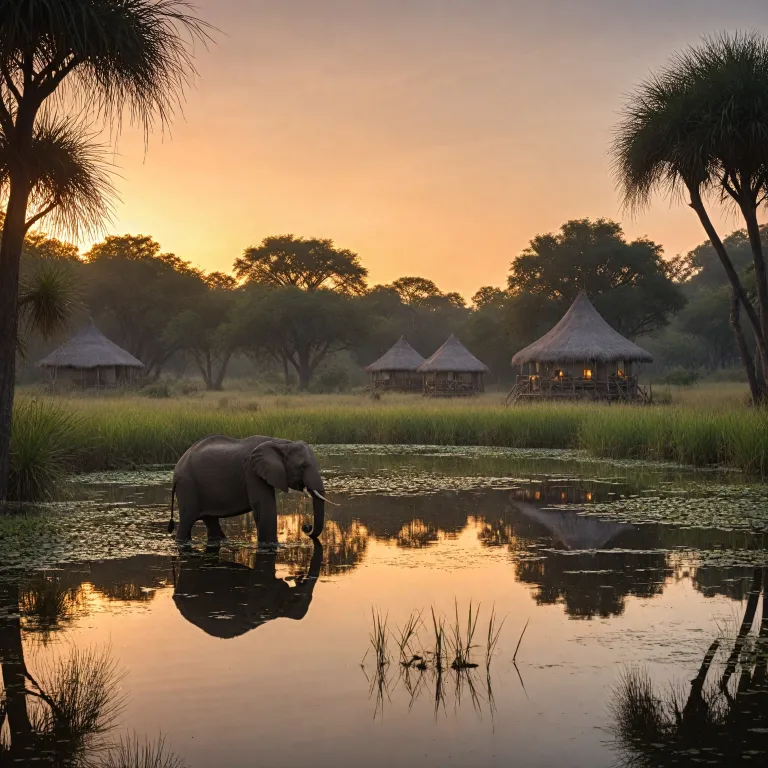
Immersive elegance at Camp Okavango in the heart of the delta
Camp Okavango sits on remote Nxaragha Island, surrounded by the shimmering channels of the Okavango Delta in northern Botswana. This intimate safari camp offers a refined water wilderness retreat, where every suite is raised on timber decks to frame the floodplains and palm dotted island scenery. Guests arrive by light aircraft from Maun, then glide by boat through the delta to reach the lodge, setting the tone for a tranquil safari experience from the first moment.
The camp Okavango design blends open air walkways, thatched guest rooms, and shaded decks that look across the plains and reed fringed lagoons. With only 12 safari suites and a capacity of 24 guests, the lodge maintains a genuinely private atmosphere that suits couples, families, and solo travellers seeking quiet luxury in Botswana. Each suite offers an elevated view over the water wilderness, allowing you to watch the changing light from early morning to late at night.
Unlike many camps on the edge of a national park or game reserve, this safari camp is fully water based and operates year round, regardless of the season. The surrounding Okavango Delta channels support rich game viewing, particularly for aquatic species and prolific birdlife that thrive in this unique desert delta ecosystem. For travellers comparing different camps in Botswana Okavango regions, Camp Okavango stands out as a lodge focused on slow travel, conservation, and a deeply sensory safari experience on a private island.
Water based safari experiences and refined lodge comforts
Days at Camp Okavango revolve around the water, with guided mokoro excursions and motorboat outings forming the core of each delta safari. Skilled guides pole traditional canoes silently through narrow channels, creating an intimate safari experience where you can observe tiny frogs, water lilies, and delicate birdlife at eye level. Motorboat safaris explore wider stretches of the Okavango Delta, reaching open lagoons and floodplains where game viewing often includes elephants wading through the water and red lechwe bounding across the plains.
Back at the lodge, guest rooms are designed as spacious safari suites with private decks, ceiling fans, and en suite bathrooms that balance comfort with eco sensitive construction. The open air main area includes a lounge, bar, and dining deck, all oriented to maximise the view over the water wilderness and the surrounding island. Evenings are unhurried, with dinner served under the stars and the sounds of the delta at night providing a natural soundtrack that feels both soothing and immersive.
For couples planning romantic travel in Botswana, Camp Okavango pairs beautifully with other premium properties highlighted in this elegant guide to romantic luxury hotels. Families appreciate the dedicated family suite and the calm pace of water based activities, which differ from vehicle heavy game drives in a typical game reserve. Whether you stay three nights or longer, the lodge team tailors each safari camp programme to your interests, ensuring that every delta safari outing feels personal and thoughtfully curated.
Conservation, sustainability, and the spirit of the Okavango Delta
Camp Okavango operates in one of Africa’s most fragile wetlands, so conservation is central to the lodge philosophy and daily operations. The camp uses eco sensitive materials, manages water and energy carefully, and partners with local conservation organisations and the Botswana Tourism Board to support long term protection of the Okavango. This commitment helps safeguard the delta’s role as a vital water wilderness in an otherwise arid desert delta landscape, sustaining both wildlife and nearby communities.
The surrounding Okavango Delta supports a mosaic of habitats, from permanent channels to seasonal floodplains and tree lined island clusters. While Camp Okavango focuses on water based activities rather than vehicle led game drives, guests still enjoy rewarding game viewing that includes hippos, crocodiles, elephants, and abundant antelope on the plains. Birdwatchers value the year round presence of herons, kingfishers, and raptors, which thrive in this intricate network of channels that defines the broader Botswana Okavango region.
Travellers often combine a stay at this safari camp with time in a national park or private game reserve that offers traditional 4x4 game drives, such as areas near Duba Plains or other plains camp properties. For an overview of high end options across the country, you can consult this refined guide to the best 5 star hotels in Botswana. By pairing Camp Okavango with a land based lodge, your overall safari experience spans both water wilderness and classic savannah, creating a balanced itinerary that reflects the full diversity of the Okavango Delta and greater Botswana.
Planning your stay at Camp Okavango and navigating seasons
Because Camp Okavango is a relatively small lodge with only 12 suites, it is wise to book well in advance, especially for peak travel periods. The camp operates year round, and each season offers a slightly different safari experience as water levels shift across the Okavango Delta. During higher water months, mokoro excursions and motorboat outings extend deeper into the channels, while lower water periods reveal more exposed plains and island edges that attract concentrated game.
Unlike some camps on the fringes of a national park, this safari camp remains fully operational regardless of the season, thanks to its position in a permanent water wilderness. Guests should pack light, breathable clothing suitable for warm days, along with layers for cooler evenings and early morning outings on the water. It is also important to ensure that vaccinations and travel insurance are up to date before arriving in Botswana, as access to the camp involves a light aircraft flight and boat transfer through the delta.
When comparing different camps in the Botswana Okavango region, consider how strongly you value a water based focus versus vehicle led game drives. Camp Okavango is ideal for travellers who prioritise tranquillity, conservation, and intimate contact with the delta ecosystem rather than fast paced game drives every day. For those interested in extending their safari experience beyond Botswana, this article on Zambia luxury safari travel for discerning guests offers ideas for combining the Okavango Delta with other premier game viewing destinations in the region.
Access, logistics, and what to expect from daily life in camp
Reaching Camp Okavango typically involves a scheduled light aircraft flight from Maun to a nearby airstrip, followed by a short boat transfer through the Okavango channels. This journey introduces you to the scale of the delta, as you fly over intricate waterways and then glide past papyrus lined banks toward the lodge. On arrival, staff welcome you into the open air main area, where the view across the water wilderness immediately conveys the camp’s serene atmosphere.
Guest rooms are linked to the central lodge by raised walkways, ensuring that each suite maintains a sense of privacy while still feeling connected to the heart of the camp. Mornings usually begin before sunrise with a light breakfast, followed by a guided mokoro outing, motorboat safari, or bush walk on a nearby island, depending on water levels and your preferences. After returning to the lodge, guests enjoy a leisurely lunch, time to read or rest in the shade, and then an afternoon delta safari activity that often extends into the early evening.
Dinners are typically served under the stars, with the night sounds of the Okavango Delta creating a memorable backdrop to each meal. Because the camp is located on a private island within the broader Botswana Okavango system, there is no through traffic from other camps, which preserves the quiet character of the lodge. Over several days, this rhythm of gentle exploration, relaxed downtime, and attentive service shapes a safari experience that feels both restorative and deeply connected to the surrounding game rich wetlands.
Positioning Camp Okavango within Botswana’s wider safari landscape
Within Botswana’s network of lodges, camps, and safari destinations, Camp Okavango occupies a distinctive niche as a fully water based safari camp in the heart of the Okavango Delta. Travellers who have already experienced vehicle heavy game drives in a national park or game reserve often appreciate the slower pace and sensory richness of this water wilderness. The camp’s emphasis on conservation, low guest density, and year round operation aligns with broader trends in sustainable luxury travel across Botswana.
While Camp Okavango does not offer traditional 4x4 game drives like those found at Duba Plains or other plains camp properties, it complements such destinations by showcasing a different side of the delta. Many itineraries pair a few nights at this private island lodge with time in the desert delta fringes, where drier habitats support different game viewing opportunities. This combination allows guests to experience both the iconic channels of the Okavango and the open plains that characterise other parts of Botswana Okavango safari circuits.
For travellers using a premium hotel booking website focused on Botswana, understanding how Camp Okavango fits among other lodges and camps is essential for building a coherent journey. The camp’s 12 guest rooms, emphasis on water based activities, and commitment to conservation make it particularly suitable for discerning visitors seeking authenticity rather than sheer opulence. By integrating Camp Okavango into a broader safari experience that may include city hotels, desert lodges, and classic game viewing camps, you create a layered itinerary that reflects the full diversity of Botswana’s landscapes and hospitality styles.
Key statistics for planning a stay at Camp Okavango
- Number of safari suites at Camp Okavango : 12 suites, ensuring an intimate atmosphere and personalised service for every guest.
- Maximum capacity of the lodge : 24 guests, which supports a quiet, private safari experience in the Okavango Delta.
- Geographical position of Camp Okavango : approximately 19.13493° south latitude and 23.10046° east longitude on Nxaragha Island.
- Operational period : Camp Okavango runs year round, offering consistent water based safari experiences across changing seasons.
Essential questions about Camp Okavango and the Okavango Delta
What activities are available at Camp Okavango?
What activities are available at Camp Okavango? Guests can enjoy guided mokoro excursions, motorboat safaris, and guided bush walks. These outings focus on the water wilderness and nearby islands of the Okavango Delta rather than vehicle based game drives. The result is a calm, immersive safari experience that highlights both large game and the smaller details of this intricate wetland ecosystem.
How do I get to Camp Okavango?
How do I get to Camp Okavango? Camp Okavango is accessible via a short flight from Maun to a nearby airstrip, followed by a boat transfer. Travellers usually connect through Maun from regional hubs, then board a light aircraft that offers sweeping views of the Okavango Delta. On landing, lodge staff coordinate the final transfer by boat, ensuring a seamless journey into this private island retreat.
Is Camp Okavango suitable for families?
Is Camp Okavango suitable for families? Yes, Camp Okavango offers a family suite and welcomes children aged 6 and above. The calm pace of water based activities, combined with attentive guiding, makes the camp appealing for multi generational travel. Families can enjoy shared mokoro outings, gentle bush walks on safe island terrain, and relaxed time together on the lodge decks overlooking the delta.